
White-box references are the most reliable starting point I know for product-critical generative work. They are also one of the easiest ways to create finishing debt if the team forgets what they deliberately left out.
A clean white-box or controlled-lighting turn of the product gives Seedance 2.5 a clear, unambiguous signal about geometry, logo placement, and surface response. When that signal is strong, product consistency across a thirty-second take improves dramatically. The model spends less effort inventing the product and more effort solving for motion and lighting. That is a real operational gain.
The same choice pushes environment, contact, reflection, and final integration downstream. Those elements do not disappear. They simply become someone else’s problem—usually the compositor, the lighting artist, or the editor who has to make the product sit inside a world that was never fully generated.
Understanding both sides of that trade-off is the difference between using white-box references as a control tool and using them as an accidental way to defer work.
What White-Box References Actually Solve
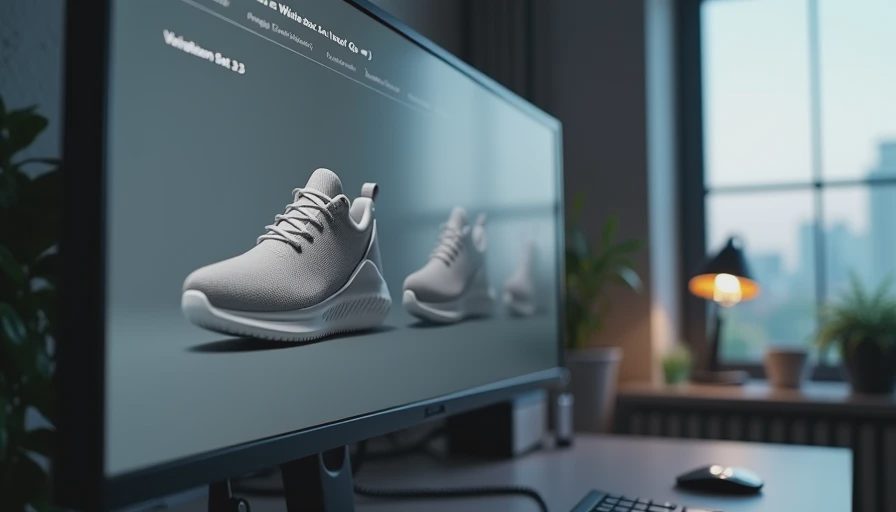
In controlled tests the benefits are consistent.
Product lock improves. Logo version and label details stay closer to the approved reference across the variation set. Small orientation changes become easier to evaluate because the baseline is clean. Legal and brand review can focus on the product itself rather than hunting for drift inside a busy lifestyle frame.
Selection becomes faster. When the product is clearly correct or clearly wrong, the team spends less time debating marginal takes. The revision-scope conversation also becomes clearer: notes that touch product geometry or logo readability can be tested against a known baseline instead of against a moving target.
For any job where the product is the non-negotiable element—packaged goods, electronics, anything with a regulated or brand-critical appearance—I still start with a proper white-box package more often than any other reference type.
What They Push Downstream
The clean product arrives without a fully solved world.
Environment and atmosphere still have to be generated, added, or composited. Contact shadows and ground-plane interaction are often incomplete or generic. Reflections and specular response may look correct in isolation and then fight the final plate. Lighting direction that felt neutral in the white-box stage can sit at the wrong angle once the product is placed in a real scene.
None of these problems are fatal. All of them are work. If the team has not planned for that work, the “clean” generative take simply moves the cleanup into a later, more expensive stage.
I have seen teams celebrate a perfect white-box product generation only to discover in the composite that the contact edge, the shadow density, or the reflected environment required more paint and projection than a traditional element would have needed. The generation did its job. The handoff accounting was incomplete.
A Practical Decision Rule
Before choosing white-box as the primary reference I ask one question:
Is the highest risk on this job product fidelity, or is the highest risk environmental integration?
If product fidelity is the highest risk, white-box is the correct primary control. The downstream integration work is accepted and planned.
If environmental integration is the highest risk, a stronger scene or lifestyle reference may be appropriate—while still protecting the product with a secondary clean set.
The rule keeps the team from treating white-box as a universal default and from being surprised by the finishing load it creates.
How to Keep the Downstream Work Visible
I require two short statements when white-box is the primary path:
What the white-box package is expected to lock (geometry, logo, surface).
What is deliberately left for later stages (environment, contact, final lighting interaction).
Those statements travel with the take. The editor and compositor then know what they are inheriting. The producer can see the finishing risk while there is still time to adjust the schedule or the approach.
Without those statements the white-box take looks finished and the finishing debt remains invisible until it is expensive.
A Calibration Example
A team I worked with generated a thirty-second product hero using a clean white-box set. Product lock was excellent. Logo readability at the hold was confirmed. The take survived its first revision note with a local adjustment. Everyone was pleased.
When the take moved into a simple environmental composite, the contact shadow and the reflected light on the product surface required more work than expected. The generation had solved the product. It had not solved the product-in-the-world problem. Because we had not flagged that gap in the handoff note, the finishing time appeared as a surprise.
On the next pilot we kept the white-box primary path and added an explicit downstream note: environment and contact will be completed in composite. The finishing team received the file with clear expectations. The work did not disappear; it simply stopped being a discovery.
The pictures remained strong. The accounting became honest. The dog was indifferent. Morgan, after hearing both versions, said the second one was the only kind of handoff she would accept on one of her own projects. She was right.
What to Do on the Next White-Box Job
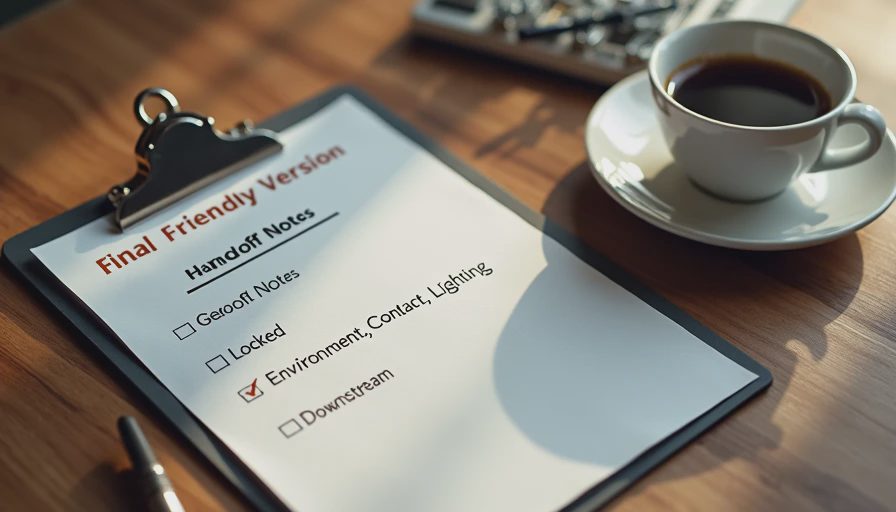
Confirm that product fidelity is the highest risk.
Build a clean, current, labeled white-box package.
State in writing what the package is expected to lock.
State in writing what is being pushed downstream.
Carry both statements in the handoff note.
Ask the finishing artist after the first composite whether the inherited work matched the expectation.
White-box references are a control tool, not a complete solution. They solve the product problem with high reliability. They push the world problem to the next stage. Both sides of that exchange need to be visible if the take is going to survive the full handoff.
A clean product generation that creates unplanned finishing debt is still only a partial workflow.
If it cannot survive the handoff, it is not a workflow yet.



No letters yet — be the first to write.