
The first time a client said “just regenerate it with the new logo,” I realized the demo had already ended.
I was sitting in a screening room that still smelled like the previous night’s pizza, watching a thirty-second clip that looked better than half the regional spots I’d shepherded through post five years earlier. The product moved correctly. The light felt intentional. The audio even landed on the right beat. Everyone in the room nodded. Then the brand manager asked for a small change—swap the background color to match the latest packaging revision—and the room went quiet in that particular way that means the schedule just gained three days of uncertainty.
That is the moment handoff proof has to exist.
Most coverage of AI video stops at the generation. The model produces something impressive. Screenshots circulate. People argue about which model “wins.” Render Handoff starts after that applause dies. It starts when the file has to leave the generation interface and enter the rest of the production chain: the edit bay, the compositing suite, the color pass, the client review deck, the legal checklist, and the final delivery folder that actually gets paid for.
If the result cannot survive that sequence, it is not yet a workflow. It is a demonstration.

The Demo Problem Is Not a Quality Problem
I used to think the gap was purely technical. Better motion. Longer consistent takes. Cleaner edges. Higher resolution. Seedance 2.5 and tools like it have closed a lot of those gaps. Thirty-second continuous generations with synchronized audio and substantial reference capacity are no longer science fiction. Teams can now produce clips that look finished enough to put in front of a creative director without apology.
Yet the operational gap remains. A clip that looks finished in the generation interface often behaves like rough footage the moment another person has to work with it.
Consider the practical sequence a mid-sized agency team actually follows:
Brief arrives with approved product shots, brand guidelines, and a thirty-second :15/:15 structure.
Someone prepares references—white-box product turns, clean plates, approved talent stills if any.
Generations run. Multiple variations are produced.
Internal selection happens.
The selected clip goes into an edit for timing, supers, and music.
Client review produces notes.
Revisions are requested.
The revised version has to hold up under color, finishing, and delivery specs.
The demo usually ends at step 3 or 4. Everything after that is where the real cost and risk live. A model can generate a beautiful thirty-second take and still force the editor to rebuild context from scratch, force the compositor to paint out artifacts that only appear under review, or force the producer to explain why a “simple” background change requires a new generation cycle instead of a local adjustment.
I have watched talented teams burn an entire afternoon trying to isolate one element that looked locked in the original generation. The visual quality was never the issue. The handoff was.
What “Handoff” Actually Means in a Commercial Setting
Handoff is not a single moment. It is a series of transfers of ownership and responsibility.
From generative artist or technical director to editor.
From editor to client stakeholders.
From client notes back to the generation or cleanup team.
From approved picture to color, sound, and finishing.
From finishing to the delivery package that legal and traffic will sign off on.
Each transfer introduces new constraints. The editor needs clean handles or at least clear in and out points. The client needs to understand what can be changed without restarting the generation. Legal needs to know what references were used and under what rights. The finishing artist needs to know whether the alpha, the motion, and the grain structure will survive the grade.
When any of those transfers fails, the production absorbs the cost in time, labor, or both. That cost rarely appears in the marketing materials for the model.
I keep a small notebook on my desk—the same one I used to track cable runs in the old post bay. On one page I wrote a simple test I now run on every new capability: Can another person, working under normal schedule pressure, take this output and continue the job without calling me for a fifteen-minute explanation? If the answer is no, the capability is still in the demo stage for that team.
A Concrete Failure Pattern I Keep Seeing
A common pattern looks like this.
A team generates a strong product hero shot with Seedance 2.5 using a clean white-box reference and a carefully written prompt. The motion is good. The product stays consistent. Everyone is pleased. The clip is dropped into a rough cut. The client loves the energy but wants the product rotated slightly so the logo faces camera more squarely during the key beat.
In a traditional live-action or CGI pipeline, that note is often solvable with a different take, a slight reframe, or a 3D adjustment. In a pure generative workflow without planned revision paths, the team often has to regenerate. Regeneration can introduce new motion, new lighting relationships, or subtle changes in the product surface that then require another round of internal review. What looked like a thirty-minute note becomes a half-day cycle.
The model did not fail. The workflow design failed to anticipate the handoff.
This is why I stopped treating impressive first generations as the primary success metric. The metric that matters for commercial work is how the output behaves under the first realistic revision request and the first transfer to another role.
Personal Context, Because It Shapes the Judgment
I spent eight years inside a mid-sized Atlanta production and post company before going independent. I started coordinating schedules and asset handoffs. Later I owned the technology decisions that determined whether a new tool actually shortened the schedule or simply moved the bottleneck. The teams I work with now are similar: agencies and production companies that have real clients, real deadlines, and limited tolerance for processes that look efficient on a slide deck and then collapse under the first set of notes.
On weekends I still drive up toward Blue Ridge or down toward Savannah with the dog in the back and a bag of tools in the trunk. I label every cable and adapter before I trust a setup. That habit came from too many late nights spent tracing signal path problems that could have been prevented with five minutes of preparation. AI video workflows reward the same temperament. The preparation that happens before the first generation—reference organization, decision about what must remain editable, clear marking of what is still demo-quality—determines whether the later handoffs hold.
My spouse, Morgan, manages projects at a design firm. She has a better instinct than I do for when a process looks clean on paper and still creates hidden work for the next person in the chain. Our middle-schooler asks better questions about “why does that take so long” than most status meetings. Those conversations keep me honest about the difference between a capability and a production system.
What Handoff Proof Requires
Handoff proof is not a single feature. It is a set of conditions that let the output travel.
At minimum, a workflow that claims to be production-ready should be able to answer these questions with evidence, not optimism:
What references were used and how were they prepared?
What generation settings and resolution were locked?
How many attempts were required to reach the selected take?
What cleanup or finishing steps are already known to be required?
What kinds of client notes can be addressed without a full regeneration?
What information travels with the file so the editor and compositor do not have to reverse-engineer intent?
What is the approximate time and labor cost, including failed generations and revision cycles?
If those answers are missing, the team is still in the demonstration phase even if the pictures look finished.
I have started asking production technology leads a blunt question in the first conversation: Show me the last AI-assisted clip that went through client review and required a meaningful change. Walk me through what happened after the note. The answer reveals more about readiness than any benchmark score.
Why This Site Exists
Render Handoff is built around that practical sequence. The focus is Seedance 2.5 because it is currently one of the tools that forces the conversation past pure generation quality. Longer continuous takes, stronger reference capacity, and frame-level editing options change what is possible—and they also change where the remaining failure points sit.
The site will not publish prompt lists detached from a delivery scenario. It will not treat every new capability as a production system. It will not hide the labor that sits between a successful generation and an approved deliverable. Every substantial workflow piece will include the test conditions, the time, the labor, the cost range, and the known points where the process still breaks.
The goal is simple. Give production teams enough field evidence to decide whether a given approach can survive the real handoff on their next project—or whether it still belongs in the internal test folder.
The First Practical Step
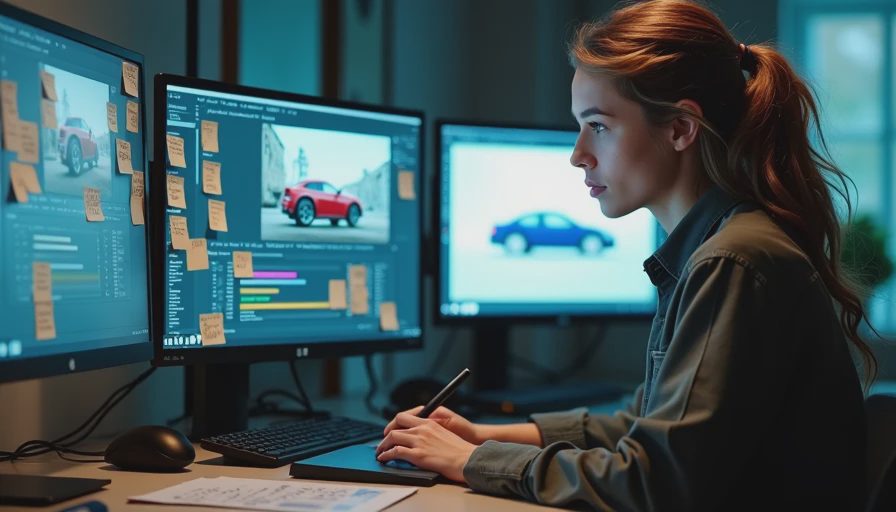
If you are evaluating Seedance 2.5 or any similar tool for commercial work this week, do not start with a hero generation. Start with a controlled handoff test.
Take one short brief. Prepare a minimal but realistic reference set. Generate a small number of takes under documented settings. Select one. Hand that file to someone who was not involved in the generation—an editor, a compositor, or a producer—and ask them to perform one realistic revision request and one basic finishing step. Document what information they needed that was not present, how long the revision actually took, and where the process felt fragile.
That single exercise will tell you more than a week of impressive demos.
The pictures are getting better. The handoffs still decide whether the work ships.
If it cannot survive the handoff, it is not a workflow yet.

No letters yet — be the first to write.