The most expensive mistake in an AI video pilot is treating an impressive generation as ready for the client simply because no one wants to be the person who says it is still fragile.
I have sat in enough review rooms to recognize the pattern. A take looks strong on the large monitor. The product is correct. The motion feels intentional. Someone says “this is close.” The file gets added to the client deck. Two days later the first note arrives and the team discovers the take cannot absorb the change without a full regeneration cycle. The visual quality was never the problem. The marking was.
Demo-quality and deliverable-quality are not points on a beauty scale. They are statements about what the take can survive next. A clear internal marking system is the cheapest way I know to keep those two categories from collapsing into each other.
Why a Simple Marking System Beats Vague Praise
Most teams already have informal language for this. “Pretty good.” “Might work.” “Let’s show it.” The problem is that informal language does not travel. The person who generated the take and the person who builds the client deck often apply different private standards. By the time the file reaches the stakeholder, the caveats have evaporated.
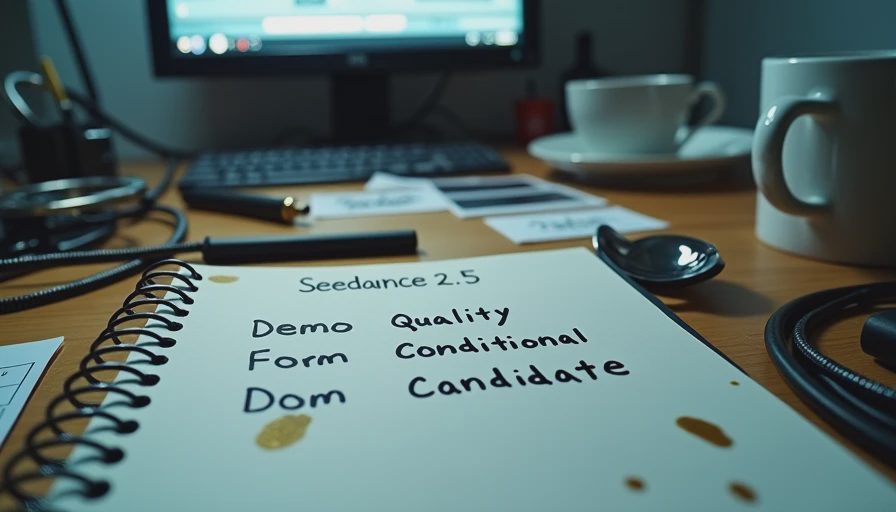
I use three marks. They are deliberately plain and deliberately limited. Every take that leaves the generation stage receives one of them before it is allowed into any external conversation.
Demo-Quality
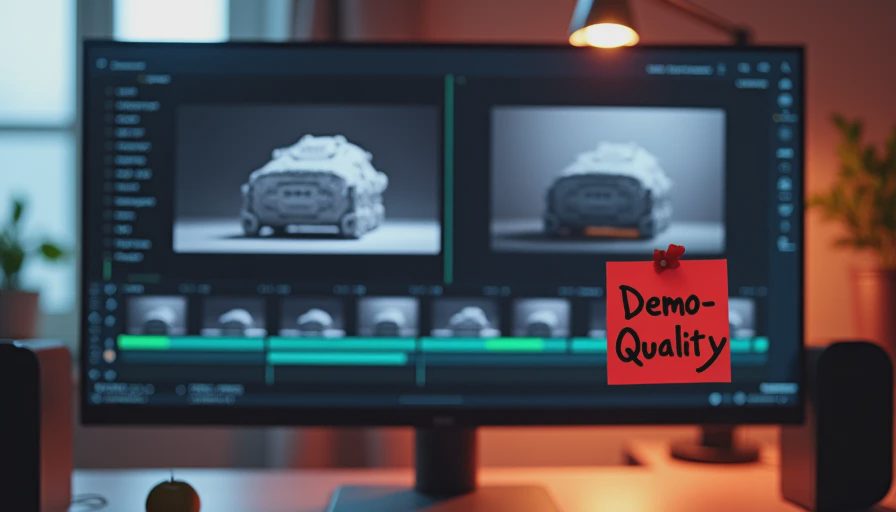
The take is useful for internal discussion, technical evaluation, or learning. It is not ready to be shown to a client as a candidate for the job.
Typical reasons a take stays in this category:
Product consistency is acceptable but not locked under the key moment
Motion works in isolation but fights likely cut points
Artifacts are visible when the clip is stepped or looped
Revision path for the most likely notes is still unknown or requires full regeneration
Demo-quality takes are not failures. They are information. They stay in the internal folder and help the team refine references, prompts, or selection criteria. They do not go into the client review deck.
Conditional
The take meets the written selection criteria and is strong enough to show, but only with explicit caveats about what can and cannot be changed.
Conditional marks require a short attached note:
What is locked
What kinds of notes can be handled locally
What kinds of notes will force a regeneration
Any cleanup already performed or still required
I treat Conditional as the default for early pilots. It forces the team to surface the revision limits before the client does.
Candidate
The take meets the criteria, the revision path for the most likely notes has been tested or is clearly understood, and the handoff information that would travel to an editor or finishing artist is already written.
Candidate is the only mark that allows a take to be presented as a serious option for the job. Even then, the presentation should still state the test conditions and the known limits. “Candidate” is not a synonym for “finished.”
How the Marks Are Applied in Practice
The marks are assigned during internal selection, against criteria that were written before generation began. They are not assigned in the client meeting and they are not assigned by the person who feels most optimistic that day.
I require the mark and its short note to travel with the file. In practice that means a simple text sidecar or a line in the review spreadsheet. The format is less important than the discipline. If the mark is missing, the take is treated as Demo-Quality by default.
This rule has saved more awkward client conversations than any technical improvement I have seen in the last year.
What Changes When the Marks Are Used
Three things become visible quickly.
First, the team stops arguing about whether a take is “good.” They argue about whether it is ready for the next handoff. That is a more useful argument.
Second, the variation budget starts to mean something. When only Candidate or carefully noted Conditional takes are allowed into external review, people become more selective about which generations they fight for.
Third, the first client note stops feeling like a surprise. Because Conditional takes already carry a statement of revision limits, the team has already practiced the conversation they will need to have.
I have watched teams without a marking system burn two days explaining why a change that looked small required a new generation cycle. Teams that mark consistently still receive hard notes. They simply receive them with less confusion and less lost trust.
A Short Calibration From the Desk
Earlier this month I ran a controlled thirty-second product test with a small agency team. Four takes. Written criteria. One pre-agreed client-style note.
Two takes were clearly Demo-Quality: product drifted under the hold and motion left no clean cut point. One take was Conditional: strong product lock, usable motion, but the background would fight a super and the revision path for a background simplification was still untested. One take earned Candidate after a local adjustment confirmed the most likely logo-orientation note could stay local.
Only the Candidate take and the carefully noted Conditional take were allowed into the simulated review deck. When the note arrived, the conversation was short. The limits had already been stated. The dog slept through the entire review. Morgan later said the marking felt like the status labels she trusts on her own projects: they do not make the work easier, they make the risk visible before it becomes expensive.
That is the entire point.
How to Install the System This Week

Agree on the three marks and the rule that an unmarked take is Demo-Quality by default.
Write selection criteria before the next generation cycle.
Assign marks during internal selection, not afterward.
Require a short revision-limit note on every Conditional take.
Keep Demo-Quality takes out of any external deck.
Review the marks after the first real or simulated client note and adjust the criteria if needed.
Do not wait for a perfect taxonomy. Three plain categories applied consistently will outperform a more elaborate system that no one actually uses under deadline pressure.
The pictures coming out of Seedance 2.5 are often strong enough to tempt a team into skipping this step. The handoff still requires it.
A take is not ready for the client because it looks finished. It is ready when the team can state, in writing, what happens when the first real note arrives.
If it cannot survive the handoff, it is not a workflow yet.



No letters yet — be the first to write.