

The first time a generation cycle looks fast, the room gets optimistic. The second time the same cycle is slow again, the optimism turns into a question: was the saving real, or did we just get lucky?
I have watched this pattern enough times to treat early speed with suspicion. A team runs a Seedance 2.5 test, the takes come back quickly, selection is clean, the revision note stays local, and someone announces that the process just saved two hours compared with the previous way of working. The next brief arrives, the same people follow what they think is the same process, and the cycle expands back to its old length—or longer. The two-hour saving existed. It was just not yet repeatable.
Repeatability is the difference between a fortunate run and a workflow. Counting only the lucky cycle produces a cost story that cannot be trusted on the next job.
Why Early Savings Disappear

Three causes appear over and over.
First, preparation was tighter on the fast run than anyone noticed. The reference package happened to be clean, the locked list happened to be clear, and the variation budget happened to be respected. On the next run those conditions are looser and the time reappears downstream.
Second, the revision note on the fast run happened to stay local. The team treats that outcome as the new normal. The following note does not stay local, and the cycle length returns.
Third, undocumented judgment calls made by one person are treated as process. When that person is unavailable or simply less focused, the invisible decisions take longer or go missing.
The model did not slow down. The surrounding discipline did.
Measuring the Difference Between a Fast Run and a Repeatable One
I now record two numbers on every pilot after the first successful cycle:
Wall-clock and labor time of the best run
Time required to reproduce the same result on a second, separate brief under the same stated process
If the second run lands within a reasonable band of the first, the saving is starting to become real. If the second run expands significantly, the original saving was still dependent on unstated conditions.
The second measurement is the one that matters for budgeting. A two-hour saving that only appears once is not a rate the producer can put in a schedule.
What It Usually Takes to Make the Saving Stick
In the controlled tests I have run with small agency teams, turning a one-time fast cycle into a repeatable one consistently requires additional work in three places:
Writing down the preparation steps that were actually followed on the fast run (not the steps people thought they followed)
Forcing the revision-scope test to happen on every cycle, not only when the take looks strong
Creating a short handoff note template so the information that traveled with the file the first time travels every time
That documentation and enforcement work often consumes several hours across the next one or two pilots. It is the cost of converting a fortunate result into a process other people can run.
I have come to expect that a clean two-hour saving will cost roughly twice that amount in disciplined follow-up before it can be trusted on a live job. The ratio is not exact. The direction is consistent.
A Concrete Example From Recent Tests
A five-person team landed a thirty-second product cycle that, from the start of preparation to a marked take surviving its revision note, came in about two hours under their previous average. Everyone was pleased. The producer started adjusting the next schedule.
We ran the identical process statement on a second synthetic brief one week later. Preparation was slightly less precise. The variation set drifted. The revision note forced a short additional cycle. The full path landed closer to the old average than to the new “saved” number.
We spent the following sessions writing the actual preparation checklist, locking the variation budget rule, and requiring the handoff note before any take could be marked Candidate. The next two cycles sat inside a tight band of the original fast run. The two-hour saving had become real. Making it real had taken more than four additional hours of process work spread across those sessions.
The pictures did not improve dramatically. The predictability did. The dog slept through the entire accounting exercise. Morgan, reviewing the before-and-after times, said it looked like every efficiency she has ever seen that survived contact with a second project. She was right.
How to Budget for Repeatability
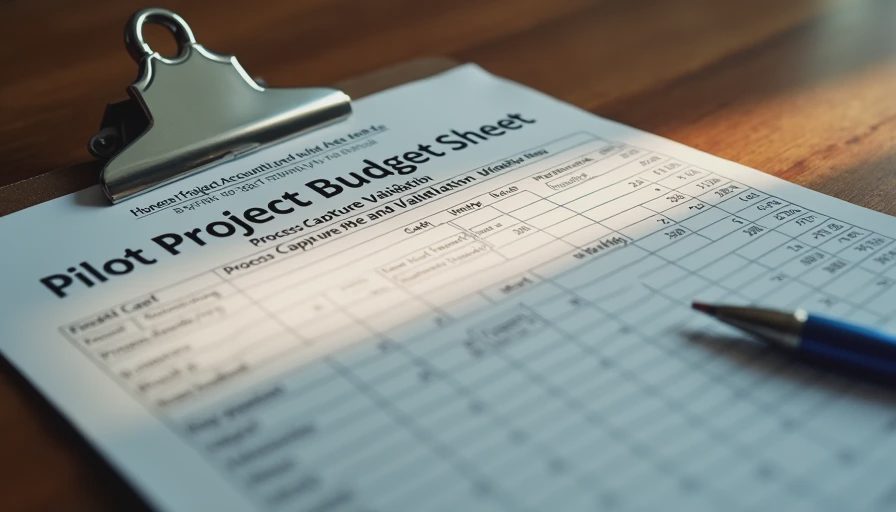
When a pilot produces an attractive time saving, do not put the new number into the schedule yet. Put a temporary line in the budget for “process capture and second-brief verification.” Run the second brief. Measure the delta. Only after the second (and ideally third) cycle sits in the same range should the saving be treated as a working rate.
This feels conservative. It is cheaper than discovering on a client job that the fast cycle was still a one-time event.
What to Do After the Next Fast Run
Record the exact labor and wall-clock time.
Immediately schedule a second brief under the same written process.
Capture every preparation and decision step that was actually used on the fast run.
Require the revision test and handoff note on both cycles.
Compare the two fully loaded times.
Only then decide whether the saving is ready to influence the schedule.
Speed that appears once is a promising data point. Speed that survives a second independent brief is the beginning of a workflow.
The two-hour saving was real. It simply was not free. The cost of making it repeatable belongs in the account the same way failed generations and revision tests do.
If it cannot survive the handoff, it is not a workflow yet.



No letters yet — be the first to write.