A single impressive generation proves the model can produce a picture. A reproducible test proves the team can move that picture through selection, internal review, and a simulated client note without losing the plot.
I run the same controlled sequence whenever a production team wants to know whether Seedance 2.5 can sit inside their actual pipeline rather than beside it. The sequence is deliberately modest. It does not try to make a finished commercial. It tries to expose the handoff points that usually stay hidden until the first real review cycle.
The goal is not a hero frame. The goal is a documented path from the first generation to a client-style note, with enough evidence to decide what to keep, what to fix, and what still belongs in the test folder.
The Test Design

I keep the brief short and synthetic so the focus stays on process rather than client politics. A typical version looks like this:
Product: a single packaged-goods item the team already understands
Length: one continuous thirty-second beat
Delivery intent: social or pre-roll style, horizontal
Success criteria written in advance: product remains correct and readable at the key hold, motion supports at least two clean cut points, no obvious artifacts that would force heavy cleanup before an editor could use the take
Variation budget is fixed before any generation begins—usually four to six takes. Selection criteria are shared. One realistic client note is written down in advance so the team cannot invent an easy note after the fact.
Everything is recorded: references used, generation settings, number of attempts, time by role, and what happened when the note arrived.
Stage 1: Preparation Lock
Before the interface opens, the five-item prep sheet from the earlier checklist is completed:
Delivery frame and aspect ratio
Locked elements (product geometry, current logo version, any non-negotiable claims)
Reference package (clean white-box or controlled product set as primary)
Variation budget and selection criteria
One hypothesized client note
I have watched teams skip this stage because it feels slow. It is the cheapest time they will spend. Once generation starts, every missing decision becomes more expensive.
Stage 2: First Generation Cycle
References go in. Prompt and settings are recorded. The fixed number of takes is generated under the same conditions.
I do not chase perfection in this cycle. I chase information. Which takes stay consistent on the product? Which ones produce motion that an editor could actually cut? Which ones introduce artifacts that only become obvious when the clip is looped or stepped through frame by frame?
The output of this stage is not “the best take.” It is a short ranked list with notes attached to each take: what works, what is fragile, and whether the take is even a candidate for the next stage.
Stage 3: Internal Selection and Marking
Selection happens against the criteria written before generation, not against whatever looks prettiest in the moment.
Every selected take receives a plain-language mark:
Demo-quality: useful for internal discussion, not yet ready for external review
Conditional: strong enough to show with clear caveats about revision scope
Candidate: meets the written criteria and is ready for the simulated client note
I insist on the marks because they prevent the common failure mode where an attractive take is treated as finished simply because no one wants to be the person who says it is still fragile.
The selected candidate and its mark travel together. That small piece of context is the beginning of the handoff record.
Stage 4: Simulated Client Review
The hypothesized note is applied exactly as written. No softening. No switching to an easier request.
Typical notes I use:
“Can we rotate the product so the logo reads more clearly at the hold?”
“The background is fighting the super—can we simplify it?”
“We need the hero moment to land a beat later.”
The team then executes the response path they planned: local redraw or adjustment if possible, targeted regeneration if necessary, or full restart if the process has no cleaner option.
Time and labor are recorded. The result is compared against the original selection criteria. The question is simple: did the note stay local, or did it force the team back to the generation stage?
This is the moment most demos never reach. It is also the moment that tells you whether the workflow is starting to hold.
Stage 5: Handoff Note for the Next Role
Even in a controlled test I require a short handoff note that would travel with the file to an editor or finishing artist:
References and version used
Generation settings and resolution
Cleanup already performed
Known fragile elements
What kinds of further notes are expected to stay local versus require regeneration
If the team cannot write that note cleanly, the process is still too dependent on the person who ran the generations. That dependency is itself a finding.
What the Test Usually Reveals
Across the tests I have run with mid-sized teams, the pattern is consistent.
Generation quality is rarely the limiting factor. Seedance 2.5 produces coherent thirty-second takes with usable product consistency when the references are clean. The friction appears in three places:
Selection discipline under time pressure
Clarity about which notes can be absorbed without a full restart
Information that fails to travel with the file into the next role
When those three are handled deliberately, the path from first generation to a simulated client note becomes repeatable. When they are left to improvisation, each new note feels like a new project.
A Concrete Run From the Desk
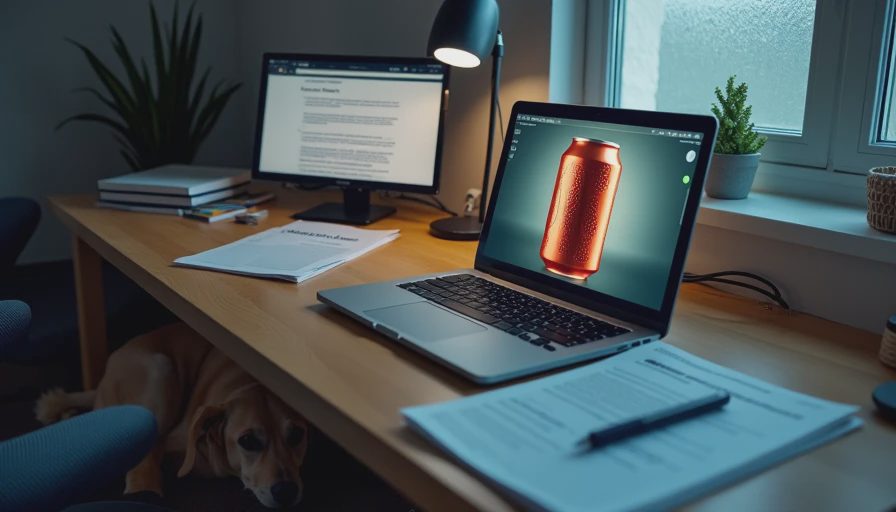
I ran this exact sequence last week with a five-person team that handles regional brand work. Synthetic beverage can, clean white-box reference set, four-take budget, selection criteria written on one page, hypothesized note locked in advance: rotate the can so the logo reads more clearly at the hold.
Generation took less wall-clock time than the preparation. One take clearly met the criteria. The note was addressed with a local adjustment rather than a full regeneration. The handoff note took ten minutes to write and answered every question an editor would have asked.
Total labor, including preparation and documentation, fit inside a single morning. The dog slept through most of it. Morgan glanced at the marked takes and the final note and said the process looked more like the project plans she trusts than the ones that look finished on day one and unravel on day three.
That run did not prove the model is ready for every commercial delivery. It proved the team could move a take from generation to a realistic note and still know what they had.
How to Run the Test Yourself This Week
Write a short synthetic brief you already understand.
Complete the five-item prep sheet.
Generate under a fixed variation budget.
Select and mark against written criteria.
Apply one pre-written client-style note exactly as stated.
Record time, labor, and whether the note stayed local.
Write the handoff note that would travel to the next role.
Do not expand the scope until this sequence is clean. The first reproducible path is more valuable than a collection of impressive but isolated generations.
The model can now give you a continuous thirty-second take that looks like commercial footage. The test tells you whether that take can survive the first real review cycle and still be useful to the next person in the chain.
If it cannot survive the handoff, it is not a workflow yet.

No letters yet — be the first to write.